
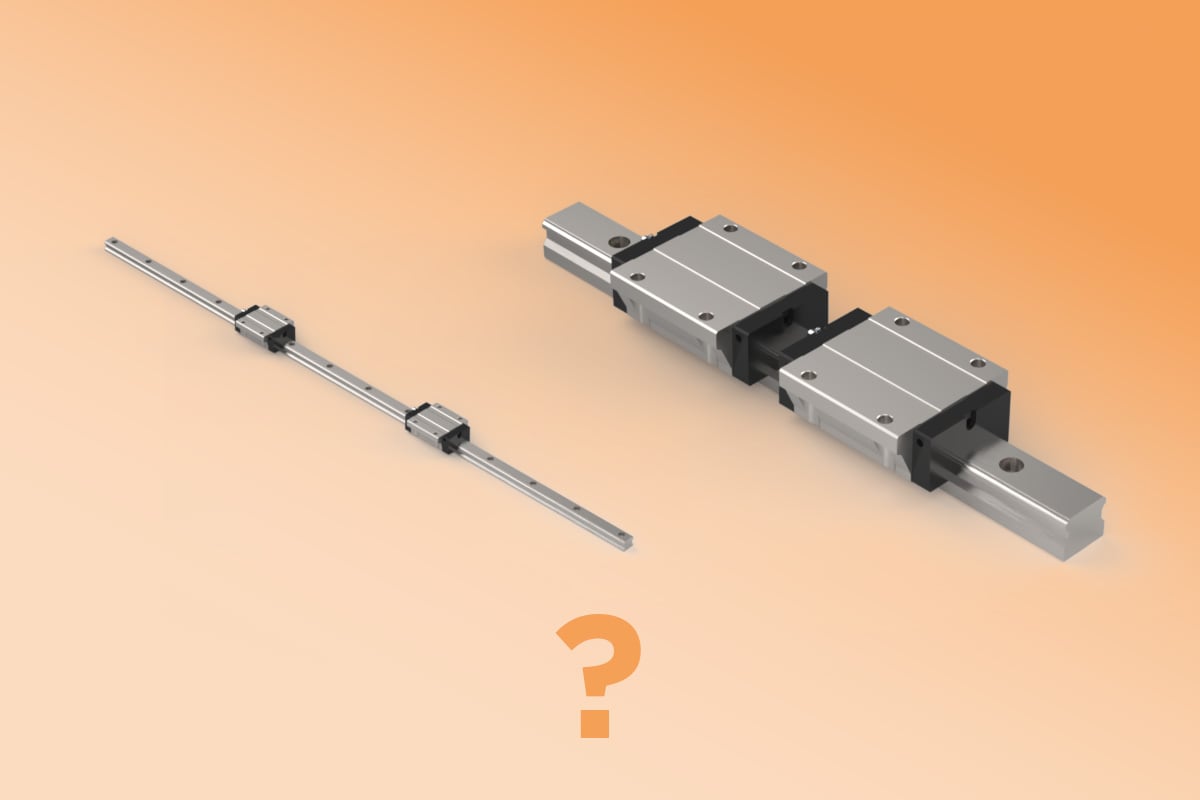
How do I choose the right size for my linear rail system? Choosing a linear guide system that is one or two sizes larger than the actual requirement can sometimes feel like a safe choice. However, with a correctly performed needs analysis, this is not necessary. We help you understand the fundamental criteria you need to identify to dimension correctly.
A popular linear product
Rail guides offer high performance compared to both size and component cost. They are popular linear products and are often used even for very low loads and low-intensity applications.
Sometimes it can feel reassuring to play it safe and choose a larger linear guide system than the application actually requires. But if a thorough needs analysis has been carried out, this is an unnecessary safety measure that often leads to additional costs
By conducting a detailed analysis of the application’s requirements, you can avoid overdimensioning your linear guide system. So, what should you consider when dimensioning your linear guide? That’s exactly what we’ll explain!
Load and how it affects size selection
To achieve a well-dimensioned application, various factors need to be considered compared to the application requirements and the rail guide’s performance. First, you need to calculate the “worst case scenario” in the system, based on the size, direction, leverage or position. Consideration needs to be given to varying loads over time, as well as to possible moments that arise.
Smart rules of thumb for simple applications
There are a couple of smart rules of thumb to use when dimensioning simpler applications. If all the statements below are true for your application, you can skip all calculations.
If the rail guide is also re-lubricated at least every 6 months, it will have an almost eternal life
Rules of thumb for simple applications |
|
When rules of thumb aren't enough
Are the rules of thumb not enough for your application? Then there are a few basic criteria and conditions that you must identify and consider before you can choose or dimension your rail guide solution.
Criteria for dimensioning rail guides |
|
Three important factors that influence size selection
In addition to the above guidelines, there are three significant factors to consider.
- Vibrating or shock load
- Number of slider blocks in close proximity to each other carrying the load
- Ambient temperature
With these tips, you are well on your way to successfully dimensioning your linear rail system. If you want to know even more about linear rail guides, you are welcome to download our ultimate guide here.


