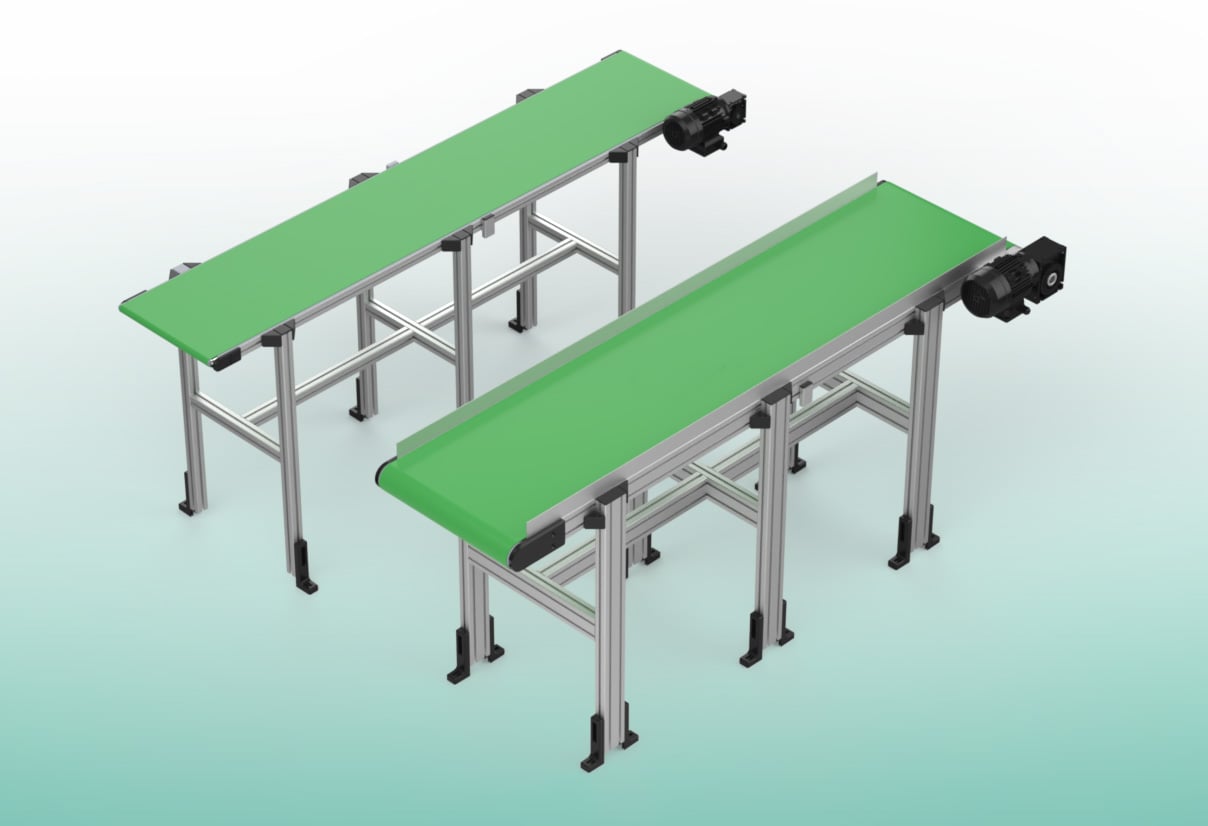
Deciding how your belt conveyor should be designed can sometimes feel like an overwhelming task. But with our checklist, the job becomes a little easier. We have compiled five important points to consider when designing your belt conveyor.
How can you optimize your belt conveyor design?
Belt conveyors are used in many different industries, such as the food industry, logistics, and material handling, to move products through various production and packaging stages. When designing your belt conveyor, there are several important aspects to consider ensuring that it operates efficiently and reliably. In this blog post, we will go through five crucial tips that will help you create a belt conveyor that best matches your needs. Read on to discover how you can optimize your design and avoid common pitfalls.
1. Consider the properties of the material to be transported
A belt conveyor can transport a wide range of materials and goods, such as plastic, grain, sand and wood chips, as well as individual items such as cartons and bags.
- Consider factors such as weight, shape, size, temperature, humidity and how fragile the material is.
- For rigid materials, belt profiles and conveyor guides may be required to secure the goods.et.
- Is there a risk of spillage, dust, liquid or contamination?
2. Choose the right belt type
The belt is the core of the conveyor. The choice of material should be based on the requirements of the application. The belt material must be suitable for both the transported goods and the environment (e.g. high heat, chemicals or food grade).
- Rubber for heavy loads.
- PVC for general industrial use.
- Fleece belt for sharp objects.
- Is a vision camera used? Then consider choosing a belt adapted for this (e.g. a fleece belt)
3. Sizing & capacity
Undersizing your belt conveyor can lead to downtime and wear, while oversizing unnecessarily increases costs. Design the conveyor frame according to the current environment and load.
Define correctly:- Width
- Length
- Inclination
- Speed
Choose a frame of:
- Steel for heavy-duty applications.
- Aluminium for flexible constructions and easy-to-assemble systems.
- Use covered aluminium profiles for environments with high cleanliness standards.
4. Choose the right motor and drive system
Choose a motor that can handle the required load, possibly with some form of speed control.
- Define the correct motor power for the load and the desired speed.
- Select the motor type and the type of control system: manual, automatic, frequency controlled
- Choose between centre and end drive. End drive moves the motor under the conveyor and provides the ability to reverse the belt, i.e. drive in two directions.
- Make sure that there is a possibility to regulate speed if necessary (e.g. via a frequency converter).
5. Maintenance, access & safety
Design for easy maintenance. It should be easy to clean, change belts or access different parts.
- Include safety features such as emergency stops, protection for rotating parts, sensors, etc.
- Follow relevant machinery directives and work environment regulations.
Once you have checked off all the items on this list, you will have a good basis for determining which type of belt conveyor is best suited for your application.
For further advice or special applications, we are always available for assistance.